Aquapeya vs Bisleri: How Trademark Infringement on Shark Tank India Forced a Startup Rebrand
2026-06-14
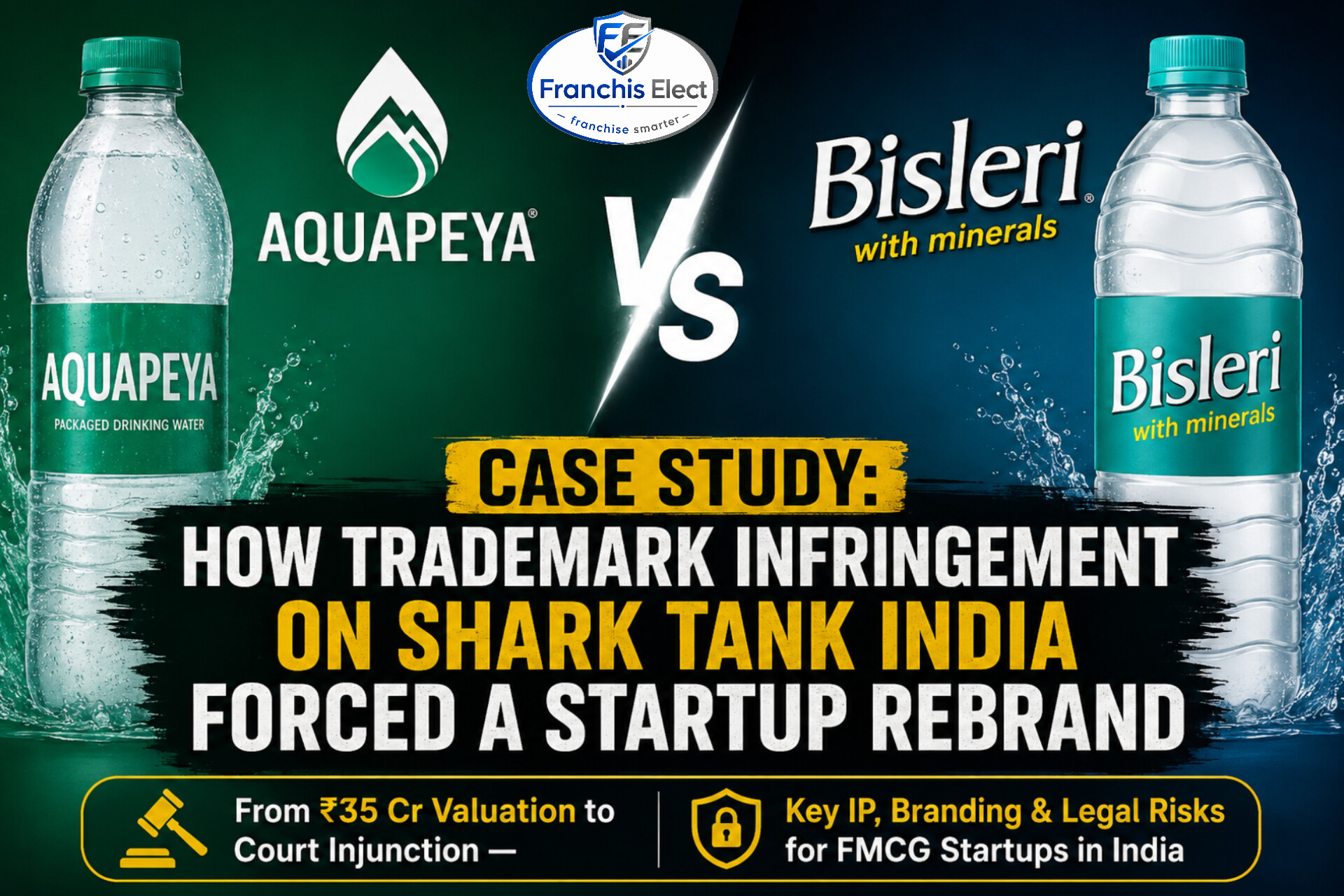
From ₹35 Cr Valuation to Court Injunction — Key IP, Branding & Legal Risks for FMCG Startups in India
Aquapeya, a packaged drinking water and beverage startup from Maharashtra, faced a business-critical injunction after admitting on Shark Tank India Season 4 that it intentionally replicated Bisleri’s trade dress. The Bombay High Court’s ruling halted manufacturing and marketing, forcing a complete brand overhaul. The case is now a benchmark for trademark infringement, passing off, and IP risk management in India’s FMCG sector. Case Facts: Shark Tank Pitch to Legal Action Company: Aquapeya — Packaged water & soft drinks Founders: Tushar & Ravi Mundada Deal Secured: ₹70 Lakhs for 2% equity from Namita Thapar & Ritesh Agarwal Implied Valuation: ₹35 Crore during pitch Legal Trigger: Televised admission of mimicking Bisleri’s color scheme to leverage brand equity Plaintiff: Bisleri International Pvt. Ltd. Allegation: Trademark infringement & passing off due to deceptive similarity Court Order: Bombay High Court injunction — halt manufacturing, packaging, marketing The IP Violation: Why Bisleri Won Bisleri’s legal team argued that Aquapeya’s bottle design and green color palette created consumer confusion and constituted trade dress infringement. Trademark protection extends beyond logos to visual identity, label layout, and distinctive color schemes. The founders’ on-air statement that they used green to “ride on the goodwill” of market leaders became admissible evidence, undermining their defense. Business Impact & Strategic Pivot The injunction served as a forced go-to-market reset. Aquapeya had to: 1. Cease operations immediately across manufacturing and distribution 2. Rebrand completely — new packaging, visual identity, and positioning 3. Rebuild distribution under a compliant brand architecture Post-rebrand, Aquapeya reported 40% revenue growth and scaled to 15,000+ retail outlets pan-India, proving that IP compliance can drive sustainable scalability. Key Strategic Takeaways for D2C & FMCG Founders 1. Public Disclosures Are Legal Liabilities National TV pitches are public domain. Unfiltered comments on “imitation branding” or leveraging competitor equity can be cited as legal admissions in infringement suits. Media training and legal vetting of pitch scripts are non-negotiable. 2. Trade Dress Is a Protectable Asset IP portfolios must cover brand name, logo, packaging architecture, and color schemes. In saturated categories like packaged drinking water, visual differentiation is critical to avoid passing off litigation. 3. Conduct Pre-Launch IP Due Diligence Startups must run trademark clearance searches and design audits before commercializing. Reactive rebrands cost capital, disrupt supply chains, and erode first-mover advantage. 4. Build Moats, Not Mimics “First copy” positioning limits brand equity and invites litigation. Long-term market penetration requires proprietary value propositions, product innovation, and authentic brand storytelling. Business Milestones: Pre vs Post Litigation Pre-Injunction: ₹35 Cr valuation, 2% equity dilution for ₹70 Lakhs Post-Rebrand: 40% sales growth, 15,000+ outlet footprint across India
Want results like these?
Tell us about your brand or goals — we'll map an expansion playbook that fits.