Reebok India's Growth Blueprint: How the Brand Doubled in 3 Years
9 min read · 2026-06-15
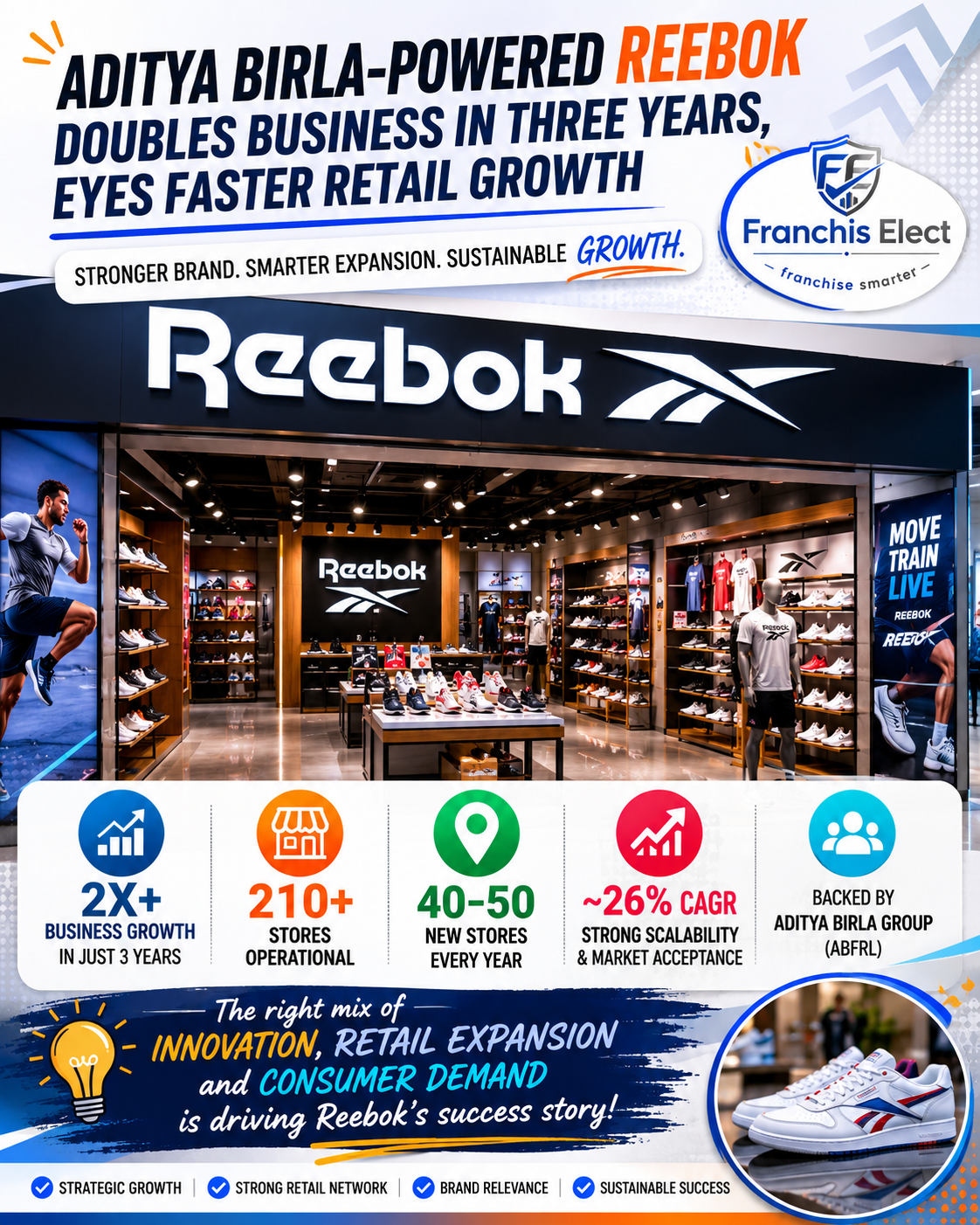
What franchise leaders can learn from Reebok's expansion strategy — 210+ stores, 26% CAGR, and a masterclass in scaling retail through consumer relevance and disciplined execution.
In a retail market where global brands often stall, Reebok India stands out. Since ABFRL acquired exclusive India rights in 2021, the brand has more than doubled its business, scaled to 210+ stores, and committed to opening 40–50 outlets annually. For franchise investors, retail operators, and expansion leaders, Reebok's turnaround is a compelling retail growth strategy case study, demonstrating how franchise expansion strategy, consumer demand, product innovation, and disciplined execution can create sustainable business growth. The numbers are strong. The strategy behind them matters more. Reebok India: Key Growth Metrics | Metric | Performance | |--------|-------------| | Business Growth | 2x+ in 3 years | | Retail Network | 210+ stores operational | | Expansion Plan | 40–50 new stores per year | | Ownership | Aditya Birla Group (ABFRL) | | Category | Sportswear & Athleisure | CAGR Insight Doubling in three years implies approximately 26% CAGR — an exceptional performance in a highly competitive retail sector. For franchise developers and multi-unit operators, sustained 26% CAGR provides confidence that expansion is supported by genuine consumer demand rather than short-term market momentum, making the business highly scalable. Why This Growth Matters India's sportswear and athleisure market is evolving from a performance-focused category into a lifestyle-driven industry. Reebok successfully tapped into rising fitness culture, athleisure adoption, casualization of fashion, and premium consumption trends across Tier 2 and Tier 3 markets. The brand positioned itself at the intersection of performance, everyday style, and affordability. That intersection became a powerful demand engine. Strategic Pillar 1: Retail Expansion as a Growth Multiplier While many brands over-index on digital, Reebok doubled down on physical retail. Its 210+ stores drive trust, product trial, higher conversion rates, and stronger omnichannel engagement. In a category where consumers still prefer to try before they buy, physical stores remain a critical conversion engine. Every new outlet serves a dual purpose: generating revenue while increasing local brand visibility. With 40–50 stores planned annually, Reebok is using retail expansion as both a growth strategy and a marketing strategy. Strategic Pillar 2: Product Innovation Sustains Relevance Stores bring customers in. Products bring them back. Reebok's focus on performance technology, court shoes, and lifestyle collections keeps both loyal consumers and younger audiences engaged. The principle is simple: Innovation creates demand. Without a continuous innovation pipeline, customer acquisition costs rise and repeat purchase rates decline. Reebok's success demonstrates how product innovation and retail expansion reinforce each other to drive long-term franchise business growth. Strategic Pillar 3: Owning the Athleisure Shift Today's consumers want products that work across multiple occasions — fitness, travel, work, and everyday life. By closing the gap between sportswear and daily wear, Reebok significantly expanded its addressable market. Brands that solve multiple consumer needs tend to capture disproportionate market share. Reebok recognized this shift early and positioned itself accordingly. Strategic Pillar 4: Tier 2 & Tier 3 Market Penetration India's next retail growth wave is not limited to metros. Cities such as Kochi, Indore, Nagpur, Surat, Lucknow, Bhubaneswar, and Mysuru are emerging as high-potential retail markets. These markets offer rising disposable incomes, growing acceptance of organized retail, and relatively lower operating costs. Reebok's expansion strategy reflects a key franchise principle: follow consumer demand where ROI potential is strongest. 5 Lessons for Franchise Investors 1. Trust scales. Established brands reduce customer acquisition costs and accelerate market penetration. 2. Stores accelerate growth. Digital supports the journey, but physical retail often compounds growth faster. 3. Demand comes first. Successful expansion follows consumer demand — not the other way around. 4. Innovate or fade. Every franchise system needs a clear product or service innovation roadmap. 5. Look beyond metros. Tier 2 and Tier 3 cities are becoming India's most attractive retail growth markets. The Real Formula: Relevance Before Expansion Many brands assume expansion creates growth. The reality is the opposite. Relevance creates growth, and expansion simply magnifies it. Reebok's playbook is straightforward: Brand Strength + Consumer Demand + Product Innovation + Retail Expansion = Sustainable Growth When these elements align, franchise systems scale faster, stronger, and more profitably. The Road Ahead With 210+ stores already operational and 40–50 new outlets planned annually, Reebok India is entering its next phase of growth. If it maintains its current trajectory of approximately 25–26% annual growth, it could become one of India's most successful sportswear comeback stories over the next five years. Final Takeaway The biggest brands don't always win. The brands closest to evolving consumer demand do. Reebok India's journey is a masterclass in franchise expansion strategy, retail growth execution, consumer relevance, and sustainable scaling — lessons every franchisor, retailer, and franchise investor can learn from.

Ready to start your franchise journey?
Tell us your goals, budget and preferred territory — we'll match you with the right brand and walk you through the next steps.